Calculating the retail value of beef from a 1,900-lb. live weight fullblood Wagyu steer
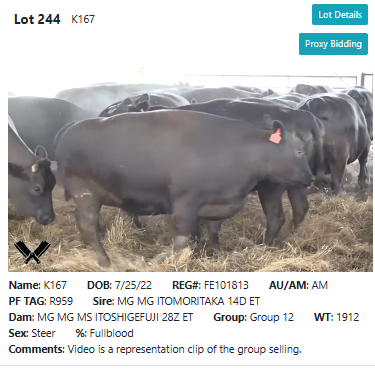
Lot 244 in the June 21, 2025 Iron Table Wagyu sale sold for $4,450. This was for a fullblood Wagyu finished steer that had a live weight of 1,912 lbs. when recently weighed. This post is to provide information to answer questions about the value of a 1,900-lb. live weight fullblood Wagyu finished steer. “Hot carcass weight” is typically around 60% of live weight. The carcass then shrinks in terms of weight by around 5% to 7% during “hanging” to arrive at around 56% to 57% “processed” carcass weight relative to live weight. The carcass is then processed into various cuts, with substantial trimming weight loss, and the resultant packaged finished cuts are priced at retail pricing at varying prices per lb. The spreadsheet at the link below provides in the “Assumptions” sheet an ability to enter an assumed live weight, hot carcass weight / live weight ratio, and an additional “hanging/drying” shrink percentage. Currently the spreadsheet is set to a 1,900 lb. live weight, with a typical 60% hot carcass weight, and then shrinks such hot carcass weight again to 56% of live weight as a “processed carcass weight”, and then breaks the carcass down into the the various “primal” cuts. A second “sheet” within the spreadsheet shows the various cuts, trim and ground beef products and fat/bones waste typical for a “mostly steaks and roasts” cut-order, and retail prices of such various cuts are shown using the pricing at our Wagyuru retail beef company published prices per lb. for such products. The end result is the total retail value pricing set forth in the spreadsheet that can be downloaded by CLICKING HERE. The total retail value shown, which is close to $23,000 for all of the beef from a 1,900-lb. fullblood Wagyu carcass is the “retail pricing” and the actual end result of sales is always somewhat less due to having “sales” and other discounting, such as discounted wholesale pricing levels to restaurants. Actual results will obviously vary based upon the exact “cut order” executed on a carcass (relatively more lower-priced ground beef, and relatively less higher-priced steaks, for instance, will reduce total end retail pricing). The ratios of yield cut-out used in this spreadsheet are from the NCBA’s “Beef Cuts” document published in 2014.